

A quick reminder that Analytic Flying is a reader-supported publication. Please consider becoming a paid subscriber and support original aviation analysis! To understand why this is important please read this!
Fuel hedging is a risk management strategy used by airlines to limit their financial exposure to volatile fuel prices. It uses a range of financial derivative products like futures contracts and options to (partially) fix the price of fuel at a future point in time.
Fuel prices are notoriously volatile, affected by the volatility in the crude oil prices. I don’t think anyone needs reminding that we’re in an energy supply shock due to the closure of the Straits of Hormuz. This shock has generated acute volatility in oil prices. For example, the price of Brent Crude oil increased 76% between the January and April 2026. By July it had declined 29% from its April level, and has since increased 48% between July and October.
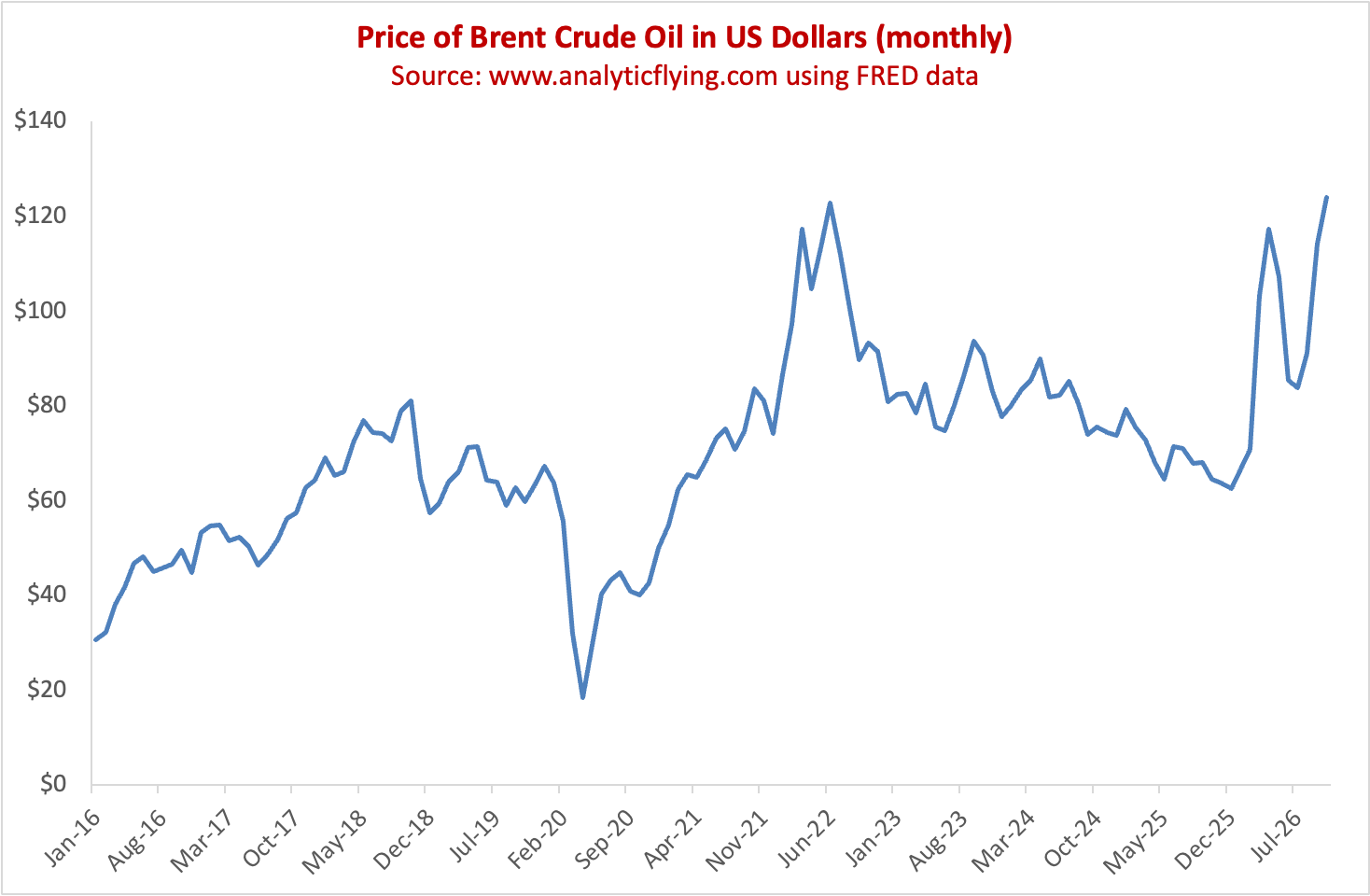
This volatility is not unusual. Volatility in oil prices is a feature of the market rather than an anomaly. Within the last decade we’ve seen a number of periods of rapidly increasing or decreasing oil prices, and only very short periods of stability or even slowly increasing or decreasing oil prices. Given that fuel is one of the largest cost drivers for airlines, it’s understandable that they utilise hedging to manage this volatility.